Wayne County, Georgia

Gravel Driveway Jesup GA — Installation & Repair by Jesup Gravel

Jesup Gravel provides gravel driveway installation in Jesup and throughout Wayne County, Georgia — including repair, grading, and delivery. Whether you're dealing with a pothole-riddled driveway that washes out every storm or building a new gravel driveway on undeveloped property — crusher run base included, free on-site quotes before any pricing.

Free Quote

Gravel Driveway Services in Jesup, GA

Jesup Gravel offers 6 gravel driveway services for residential and rural property owners in Jesup, Georgia — from new gravel driveway installation to gravel driveway repair in Jesup and full surface restoration for Wayne County properties. Every job includes proper base preparation and drainage grading.

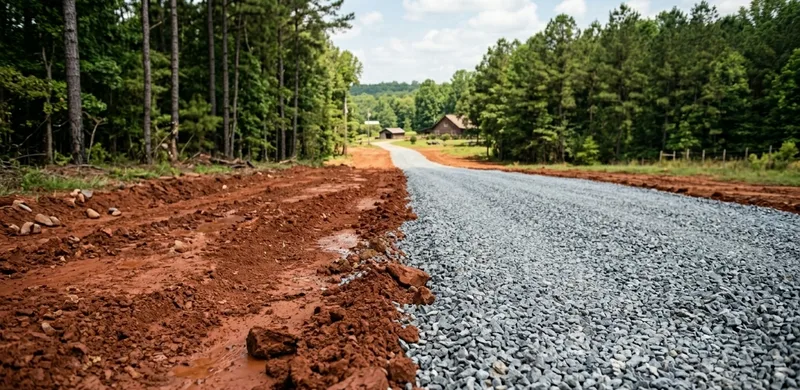
Gravel driveway installation in Wayne County Georgia

Gravel Driveway Installation

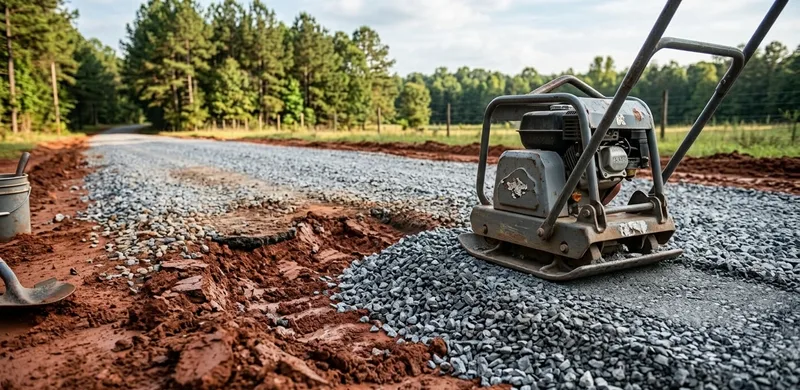
Complete new residential gravel driveway construction from base excavation through final surface. We install a compacted crusher run base before any surface stone goes down — the standard for rural Wayne County properties where sandy coastal plain soils won't hold a driveway without proper foundation work.

Learn More
Gravel driveway repair in Jesup Georgia

Gravel Driveway Repair

Pothole filling, rut correction, and edge repair for deteriorating driveways. We recompact the subbase before adding stone — not just filling surface holes with loose gravel. Southeast Georgia's heavy summer rains make proper repair technique critical for a fix that holds past the next storm season.

Learn More
Driveway grading service in Wayne County Georgia

Driveway Grading

Proper crown grading channels runoff to the sides of your gravel driveway in Wayne County — preventing the pooling and washout that erodes surfaces on the flat coastal plain terrain. We re-establish cross-slope and center crown to restore drainage without requiring a full material replacement.

Learn More
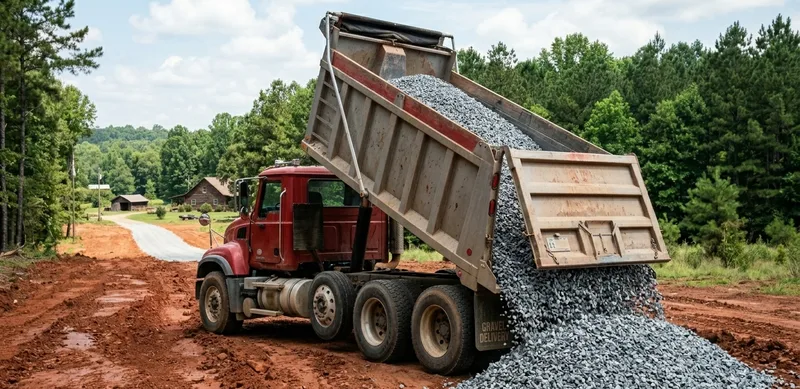
Gravel delivery and spreading in Jesup Georgia

Gravel Delivery & Spreading

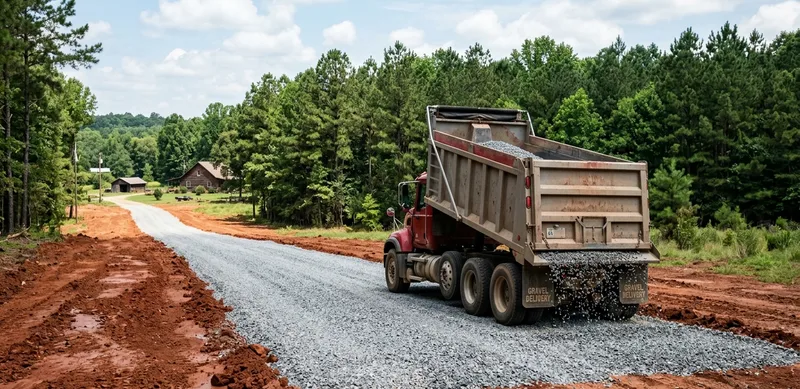
Crusher run, #57 stone, and driveway gravel delivered and spread across Jesup, Odum, Screven, and the surrounding Wayne County area. We deliver and spread — one contractor start to finish. Rural driveways here commonly run 300–600 feet, and we size material orders to match your actual job, not a rough estimate.

Learn More
Driveway restoration in Wayne County Georgia

Driveway Restoration

Full surface rebuild for a rural gravel driveway that has worn down to bare dirt or rutted beyond straightforward repair. Includes re-grading the subgrade, fresh base compaction, and new gravel topdressing. The right answer when repair alone won't restore a driveway to stable, all-weather service across Wayne County's sandy soil profile.

Learn More
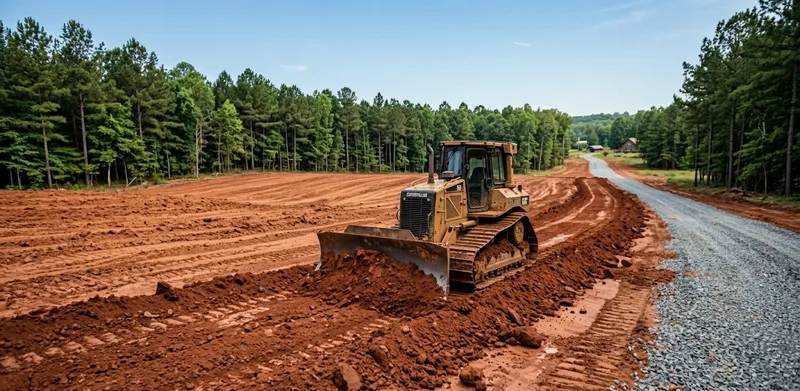
Land grading service in Wayne County Georgia

Land Grading

Site leveling and drainage preparation for new driveways, building pads, and property access roads where no driveway currently exists. Wayne County's timber land and rural residential properties frequently need raw land graded before any gravel driveway installation in Jesup can begin — we handle site grading as a standalone service or as the first phase of a full build.

Learn More

Why Wayne County Property Owners Choose Jesup Gravel for Their Gravel Driveway

Free Property Assessments

Driveway length, base condition, drainage situation, and access all affect your cost. We assess before we quote — no rough estimates handed over without seeing the site. No guesswork, no surprises when the job starts.

Crusher Run Base Included

Proper gravel driveways in Jesup, Georgia start with a compacted crusher run base layer. We don't skip the base and drop surface stone on sandy soil. The base is what keeps your gravel driveway from rutting under the first heavy truck or washing out after the first summer storm.

Built for Long Rural Driveways

Rural gravel driveways in Jesup and Wayne County commonly run 300–800 feet. The equipment, material volumes, and site assessment process here are built for those long runs — not the short suburban jobs most contractors are set up for.

Drainage Grading Standard

Every gravel driveway installation in Jesup includes proper crown grading to move water off the surface and away from structures. In Wayne County's wet climate, drainage isn't optional — it's what separates a driveway that holds up for years from one that needs repair every season.

Why Your Gravel Driveway in Jesup Fails — and How to Fix It

Sandy Coastal Plain Base

Wayne County's sandy loam soils don't bind gravel the way heavy clay soils do further north. Without a properly compacted crusher run base, your gravel driveway in Jesup migrates and washes with every heavy rain — leaving a dirt track where a surface used to be. The fix isn't more gravel on top; it's a real base underneath.

Summer Storm Washouts

Southeast Georgia averages 48+ inches of rainfall per year, often falling in short, intense storms. Without a crowned surface and drainage swales to direct water off the driveway, every heavy rain event channels runoff straight down the driveway, carrying gravel with it. Proper grading is the only reliable fix — adding stone without fixing drainage is a temporary patch.

Heavy Equipment Traffic

Timber trucks, feed trucks, and farm equipment are hard on driveways. Wayne County's active timber industry means rural access roads take significant axle loads. Without adequate base depth and proper compaction, ruts form under the first heavy load — especially in the wet season when saturated sandy soils provide almost no resistance.

Free Quote

Signs Your Driveway Needs Professional Attention

  • Potholes and ruts that refill with water after every rain
  • Gravel has washed to the edges or into the yard, leaving a dirt track
  • Standing water on the driveway surface after storms
  • Soft spots where vehicles are leaving deep tire impressions
  • New property access needed where no driveway currently exists
  • Driveway has not been regraded or topped up in 3 or more years
  • Base failure visible — gravel sinking into sandy soil underneath

What a Proper Fix Looks Like

  • Subgrade inspection before any material goes down
  • Compacted crusher run base — not just surface stone on bare soil
  • Crown grading to push water off the surface, not down the center
  • Drainage swales cut where runoff is channeling onto the driveway
  • Material sized for your traffic load — delivery trucks need a different spec than daily passenger vehicles
  • Final pass to set grade and confirm drainage before the crew leaves

Gravel Driveway Services in Jesup, GA — Local Providers, Real Work

Jesup Gravel connects Wayne County property owners with qualified local contractors for gravel driveway installation and repair. Matched providers know the soil conditions, rainfall patterns, and access road challenges that come with rural southeast Georgia properties.

Every matched job includes a site visit, proper base preparation, and grading built to handle southeast Georgia's wet seasons.

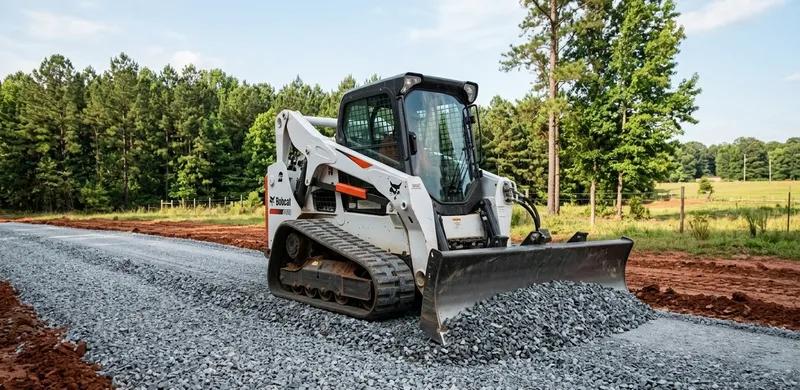
Jesup Gravel crew and equipment

Serving Jesup and All of Wayne County, Georgia

Jesup Gravel installs and repairs gravel driveways throughout Wayne County, Georgia, serving Jesup, Odum, Screven, Gardi, and surrounding communities in southeast Georgia. Most rural properties here have driveways too long for asphalt to be practical. A gravel driveway in Jesup is the working answer, and proper installation is the difference between a surface that holds up and one that needs constant repair.

Jesup Odum Screven Gardi

Serving Wayne County and surrounding communities in southeast Georgia

For county resources and permit information, visit Wayne County, Georgia or the City of Jesup.

Gravel Driveway Cost in Wayne County, Georgia

A gravel driveway in Jesup, GA typically costs $8 to $18 per linear foot for a standard 12-foot-wide surface — all-in, including crusher run base, surface stone, and drainage grading. Most rural residential driveways in the Jesup area run 200 to 500 feet, putting a complete new installation in the $2,000 to $8,000 range depending on length and terrain. Gravel driveway repair in Jesup starts at $200 to $800 for spot pothole and rut work; a full regrading pass runs $300 to $900. Gravel delivery and top-dressing for existing driveways runs $50 to $120 per ton spread. Every quote follows a free on-site assessment — we do not quote by phone without seeing the property.

Gravel Driveway Questions — Wayne County, GA

How much does a gravel driveway cost?

In Wayne County, Georgia, gravel driveway costs typically range from $2,000 to $8,000 or more for a complete installation depending on driveway length, base condition, and gravel type. Rural driveways in southeast Georgia commonly run 200–600 feet, so most projects fall in the $3,500–$7,000 range for a standard 12-foot-wide driveway. Crusher run installation runs roughly $8–$18 per linear foot. Pothole and rut repair is more affordable at $200–$800 depending on scope. Gravel delivery only runs $50–$120 per ton. Your actual cost depends on your specific driveway length, access conditions, and current base condition — we assess before quoting.

What is the best gravel for a driveway?

In Wayne County, Georgia, crusher run is the preferred base material for most driveways and works well as a surface layer too. Crusher run is a mix of crushed stone and stone dust that binds together under compaction — it resists washout and handles the heavy truck traffic common on rural Wayne County properties better than loose stone. For a finished surface layer, #57 crushed stone provides good drainage and a clean appearance. The right choice depends on your traffic load and how much long-term maintenance you want to do.

How deep should a gravel driveway be?

In Wayne County, Georgia, a properly built gravel driveway needs at least 4–6 inches of compacted crusher run as the base layer, plus 2–4 inches of surface gravel on top. The sandy loam soils of Wayne County's coastal plain don't provide the same natural compaction support found in heavier clay soils — so a thorough base is especially important here. Driveways carrying timber trucks or farm equipment should lean toward 6 or more inches of base to prevent rutting under heavy loads.

How do you fix potholes in a gravel driveway?

In Wayne County, Georgia, fixing potholes properly means more than dropping gravel in the hole. Loose material and standing water must be removed first, then the subbase is re-compacted if it has loosened. Crusher run is packed in layers and compacted firm before a surface layer goes down. Simply filling a pothole with loose stone puts it back in the same condition within a few months. Potholes repaired the right way hold up significantly longer in southeast Georgia's heavy rainfall conditions than surface-only patches.

Is a gravel driveway cheaper than concrete?

In Wayne County, Georgia, yes — a gravel driveway is significantly cheaper than concrete. Concrete typically costs $8–$15 per square foot installed, while a properly built gravel driveway runs $1–$3 per square foot. For a 400-foot rural driveway at standard 12-foot width, concrete could run $38,000–$72,000; the same gravel driveway runs $4,000–$8,000. Gravel also handles the ground movement common in Wayne County's coastal plain sandy soils better than rigid concrete, which can crack and heave. Long rural driveways in southeast Georgia are almost always gravel for exactly this reason.

Is a gravel driveway cheaper than asphalt?

In Wayne County, Georgia, yes — a gravel driveway costs significantly less than asphalt, both to install and to maintain. Asphalt installation typically runs $3–$8 per square foot, compared to $1–$3 per square foot for a properly built gravel driveway. For rural driveways in Wayne County that commonly run 300–600 feet, that gap translates to $10,000–$30,000 or more in upfront savings. Asphalt also requires sealing every 3–5 years, cracks under root pressure and ground movement in sandy coastal plain soils, and is not practical for very long rural driveways where the material cost alone becomes prohibitive. For rural southeast Georgia properties, gravel is almost always the more practical and cost-effective long-term choice over asphalt.

How do you stop gravel driveway erosion?

In Wayne County, Georgia, stopping gravel driveway erosion starts with proper grading. A crowned driveway — slightly higher in the center — sheds water to the sides rather than channeling it down the middle and carrying gravel with it. Drainage swales along the edges carry runoff to a safe discharge point. Culverts at low crossings prevent pooling. Geotextile fabric under the base layer prevents fine sandy soil from migrating up through the gravel over time, which is especially valuable in Wayne County's coastal plain soils. Most erosion problems come from driveways built without drainage planning — the fix is regrading, not more stone.

Who installs gravel driveways near me?

Jesup Gravel serves Wayne County property owners throughout Jesup, Odum, Screven, Gardi, and surrounding communities — connecting them with qualified local contractors for driveway installation, repair, regrading, and gravel delivery. Use the quote form on this page to describe your project and get matched with a local provider.

Can a gravel driveway be plowed?

In Wayne County, Georgia, snow plowing is rarely needed — the region averages fewer than one inch of snowfall per year. However, gravel driveways can be plowed when conditions require it; the blade should ride just above the gravel surface to avoid displacing stone. A properly installed driveway with a firm compacted base loses far less material during plowing than a loosely spread gravel surface. For Wayne County properties, the more relevant seasonal concern is heavy rain and summer storm drainage, not snow removal.

How long does a gravel driveway last?

In Wayne County, Georgia, a properly installed gravel driveway can last 10–20 years before it needs major work — provided routine maintenance is done. Gravel driveways need regrading every 1–3 years depending on traffic and rainfall, and occasional topdressing as stone works into the base or migrates to the edges. What fails early are driveways installed without a proper base, adequate compaction, or drainage planning. Build it right the first time and maintenance in southeast Georgia's wet climate is predictable and affordable.

What is crusher run and is it good for driveways?

Crusher run is a mix of crushed stone and stone dust — the angular pieces and fine particles bind together under compaction to create a dense, stable surface. Unlike clean stone, crusher run doesn't shift around under vehicle tires. In Wayne County and the coastal plain of southeast Georgia, crusher run is the preferred base material for driveways because it compacts firmly, resists rutting under heavy loads, and sheds water with proper crown grading. It is used either as the full driveway surface or as the base layer under a clean #57 stone topdressing.

What size gravel is best for a driveway?

In Wayne County, Georgia, the most common choice for driveway surfaces is #57 stone — 3/4-inch crushed stone that provides good drainage and handles regular vehicle traffic well. For the base layer, crusher run is the standard. Larger stones like #4 or #3 tend to shift underfoot and under tires, migrating to the edges quickly on rural driveways. For a working rural driveway that handles daily use and farm equipment, 3/4-inch crusher run base with #57 stone topdressing is the combination we use most on Wayne County properties.

Does a gravel driveway need a base layer?

In Wayne County, Georgia, yes — and this is where most DIY gravel projects fail. Dumping gravel directly on the sandy loam soils common to Wayne County's coastal plain produces a surface that sinks, ruts, and washes away quickly. A properly prepared base removes soft material, establishes correct grade, and provides a firm platform for the gravel. We compact 4–6 inches of crusher run as a base before any surface stone goes down. Geotextile fabric between the subbase and gravel is used on sites with particularly sandy or unstable soil to prevent fine material from contaminating the stone over time.

What are the pros and cons of a gravel driveway?

In Wayne County, Georgia, the main advantages of a gravel driveway are cost, flexibility, and durability on sandy coastal plain soils. Gravel costs a fraction of concrete or asphalt, handles ground movement without cracking, provides natural drainage, and can be regraded and resurfaced without full replacement. The tradeoffs are ongoing maintenance — regrading every 1–3 years and topdressing as gravel migrates — and loose stone at the entrance. For long rural driveways common in Wayne County, the cost advantage over concrete or asphalt is so significant that gravel is almost always the practical choice.

How do you keep gravel from washing away on a driveway?

In Wayne County, Georgia, gravel washing away is almost always a drainage problem. When water has no channel to follow off a driveway, it runs down the middle or along the low side carrying gravel with it. Solutions include regrading the surface to a proper crown so water sheds to the sides, cutting drainage swales alongside the driveway, installing culverts where water accumulates, and ensuring a clear fall to a safe discharge point. Geotextile fabric under the base helps in Wayne County's sandy coastal plain conditions. Fixing the drainage fixes the washout — adding more gravel without addressing drainage is a temporary fix.

How often does a gravel driveway need to be regraded?

In Wayne County, Georgia, most gravel driveways benefit from regrading every 1–3 years, depending on traffic volume and rainfall exposure. Southeast Georgia's wet summers and heavy rain events accelerate gravel migration and surface erosion. High-traffic rural driveways accessed daily by trucks or farm equipment may need attention annually. Light-use residential driveways in good base condition can often go 2–3 years between regrades. Annual inspection after heavy rain seasons helps catch developing ruts or drainage issues before they become expensive repairs.

Can you install a gravel driveway on a slope?

In Wayne County, Georgia, yes — slopes are common on rural properties and can be handled correctly with proper base preparation and drainage planning. The key is establishing the right grade, thoroughly compacting the base so it doesn't shift on the slope, and building in drainage features at the bottom and sides to prevent runoff from channeling straight down the surface. Driveways steeper than about 10% benefit from drainage breaks — short level sections or culvert crossings that interrupt flow down the slope. We assess each property's grade and drainage situation before recommending the approach.

How much gravel do I need for a driveway?

In Wayne County, Georgia, the amount of gravel needed depends on driveway length, width, and desired depth. A standard 12-foot-wide driveway needing 4 inches of gravel requires about 1.5 tons of stone per 10 linear feet — so a 300-foot driveway would need approximately 45 tons for one layer. Most full installations include a 4–6 inch compacted crusher run base plus a 2–3 inch surface layer, meaning 80–120 or more tons for a 300-foot rural driveway. We calculate the exact material quantity as part of the free quote process so you don't overorder or run short.

What is the difference between #57 stone and crusher run?

In Wayne County, Georgia, #57 stone and crusher run serve different roles in a well-built driveway. #57 stone is clean 3/4-inch crushed stone with no fine particles — it drains well and provides a clean surface layer. Crusher run is a mix of crushed stone and stone dust — the dust particles fill gaps and bind the material together when compacted, creating a firm, dense base. For driveways on the coastal plain of southeast Georgia, crusher run is almost always the base layer because it compacts tightly and resists shifting in sandy soil. #57 stone goes on top as the finished surface where a cleaner look is preferred.

How do you fix ruts in a gravel driveway?

In Wayne County, Georgia, ruts form when a driveway's base layer has lost compaction — often from saturated conditions or heavier-than-expected vehicle traffic. Filling ruts with surface stone is a temporary fix if the base underneath has failed. The right repair removes the loose material in the rut, re-compacts the subbase, packs in fresh crusher run in layers, and then finishes with surface gravel. Persistent rutting in the same spots usually indicates a base drainage issue — the ground is staying too wet to carry the load. We identify the underlying cause before recommending the repair approach.

How wide should a gravel driveway be?

In Wayne County, Georgia, a standard residential gravel driveway is 10–12 feet wide — wide enough for a single vehicle with comfortable clearance. Driveways that need to handle two-way traffic or wide farm equipment should be 14–16 feet. Timber access roads and farm roads on rural Wayne County properties commonly go 16–20 feet to accommodate logging trucks and large equipment. Wider driveways cost more in material but reduce damage from vehicles running the edges, which is one of the most common causes of gravel migration and base erosion on narrow driveways.

How long does gravel driveway installation take?

In Wayne County, Georgia, most gravel driveway installations are completed in one to two days. A standard 200 to 400-foot residential driveway on reasonably flat terrain typically takes one full day from excavation through finished surface. Longer driveways of 600 feet or more, or those requiring significant terrain work, culvert installation, or geotextile fabric through the full length, may take two days. The finished driveway is usable immediately when the crew leaves — gravel requires no curing period the way concrete does. We provide a timeline estimate as part of the free on-site assessment before any work begins.

Do I need to clear land before installing a gravel driveway?

In Wayne County, Georgia, most new driveway installations on rural property require some degree of clearing before gravel work can begin. Tree stumps, heavy brush, and debris must be removed, and the driveway corridor must be established before base preparation starts. For properties with significant timber or brush, land clearing is a separate first step — sometimes handled on the same trip, sometimes scheduled as a prior phase. Once the corridor is clear, gravel installation typically follows within days. Our quote process identifies whether clearing work is needed before gravel can be installed.

What is the best gravel for red clay soil in Georgia?

In Wayne County, Georgia, most soils are sandy loam rather than heavy red clay, but the answer applies to both conditions across the state. For red clay soil — common in middle Georgia — crusher run is the best base material because the angular stone and stone dust compact into clay rather than sitting on top of it. A geotextile fabric layer between the clay subgrade and the crusher run base prevents clay from migrating up into the gravel over time. In Wayne County's sandy coastal plain soils, the same crusher run base is essential but for a different reason — sandy soils don't bind gravel at all without a compacted base layer. Regardless of soil type, skipping the base and dropping surface stone directly on native soil is the most common reason gravel driveways fail in Georgia.

Tell Us About Your Gravel Driveway Project in Jesup

Describe your driveway in Wayne County. We'll review your project and follow up with an honest assessment — no obligation.

Tell us what you need — we'll follow up with pricing and availability.

Or email us directly: